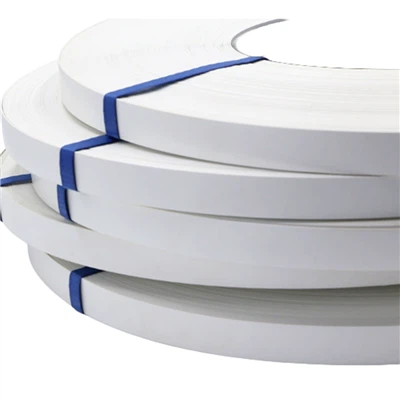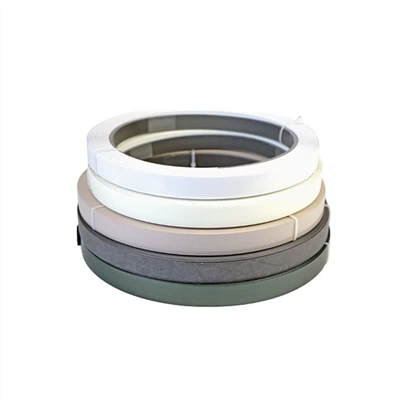

As a supplier of PVC cabinet edge trim, I often encounter questions from customers regarding various aspects of our products. One frequently asked question is about the coefficient of thermal expansion of PVC cabinet edge trim. In this blog post, I will delve into this topic, explaining what the coefficient of thermal expansion is, its significance for PVC cabinet edge trim, and how it impacts the performance and durability of our products.
Understanding the Coefficient of Thermal Expansion
The coefficient of thermal expansion (CTE) is a measure of how much a material expands or contracts in response to changes in temperature. It is defined as the fractional change in length or volume of a material per degree change in temperature. Mathematically, it is expressed as:
[
\alpha=\frac{\Delta L}{L_0\Delta T}
]
where (\alpha) is the coefficient of thermal expansion, (\Delta L) is the change in length, (L_0) is the original length, and (\Delta T) is the change in temperature.
For PVC cabinet edge trim, the CTE is an important property because it determines how the material will behave under different temperature conditions. When the temperature rises, the PVC material will expand, and when the temperature drops, it will contract. If the CTE is too high, the edge trim may expand or contract excessively, leading to problems such as warping, cracking, or separation from the cabinet. On the other hand, if the CTE is too low, the edge trim may not be able to adapt to temperature changes, resulting in poor adhesion and durability.
Coefficient of Thermal Expansion of PVC Cabinet Edge Trim
The coefficient of thermal expansion of PVC cabinet edge trim typically ranges from (70\times10^{-6}/^{\circ}C) to (200\times10^{-6}/^{\circ}C), depending on the specific formulation and manufacturing process. This range is relatively high compared to some other materials, such as wood or metal. However, PVC has several advantages that make it a popular choice for cabinet edge trim, including its affordability, versatility, and ease of installation.
To ensure the quality and performance of our PVC cabinet edge trim, we carefully control the CTE during the manufacturing process. We use high-quality raw materials and advanced manufacturing techniques to minimize the variation in CTE and ensure that our products meet the industry standards. Additionally, we conduct extensive testing to verify the CTE of our products under different temperature conditions and make any necessary adjustments to the formulation or manufacturing process.


Impact of Coefficient of Thermal Expansion on PVC Cabinet Edge Trim
The coefficient of thermal expansion has a significant impact on the performance and durability of PVC cabinet edge trim. Here are some of the key effects:
- Warping and Cracking: If the CTE of the PVC edge trim is too high, it may expand or contract excessively when exposed to temperature changes. This can cause the edge trim to warp or crack, especially if it is not properly installed or if the cabinet is subjected to extreme temperature fluctuations.
- Separation from the Cabinet: Excessive expansion or contraction can also cause the PVC edge trim to separate from the cabinet. This can occur if the adhesive used to bond the edge trim to the cabinet is not strong enough or if the CTE of the edge trim and the cabinet material are not compatible.
- Poor Adhesion: A high CTE can also lead to poor adhesion between the PVC edge trim and the cabinet. This can result in the edge trim peeling or lifting off the cabinet, especially if the cabinet is exposed to moisture or humidity.
- Reduced Durability: Over time, the repeated expansion and contraction of the PVC edge trim can cause it to wear out and lose its structural integrity. This can lead to a shorter lifespan for the edge trim and may require more frequent replacement.
Mitigating the Effects of Thermal Expansion
To mitigate the effects of thermal expansion on PVC cabinet edge trim, we recommend the following:
- Proper Installation: Ensure that the PVC edge trim is installed correctly, using the appropriate adhesive and installation techniques. This will help to ensure a strong bond between the edge trim and the cabinet and minimize the risk of warping, cracking, or separation.
- Temperature Control: Try to maintain a consistent temperature in the environment where the cabinets are located. Avoid exposing the cabinets to extreme temperature fluctuations, as this can cause the PVC edge trim to expand or contract excessively.
- Use of Expansion Joints: In some cases, it may be necessary to use expansion joints to allow for the expansion and contraction of the PVC edge trim. Expansion joints can help to prevent warping, cracking, and separation by providing a flexible connection between the edge trim and the cabinet.
- Choose the Right Material: When selecting PVC cabinet edge trim, consider the CTE of the material and choose a product that is suitable for the specific application. Some PVC edge trims are designed to have a lower CTE, which can help to reduce the effects of thermal expansion.
Other Considerations for PVC Cabinet Edge Trim
In addition to the coefficient of thermal expansion, there are several other factors to consider when choosing PVC cabinet edge trim. These include:
- Thickness and Width: The thickness and width of the PVC edge trim can affect its appearance and durability. Thicker edge trims are generally more durable and can provide better protection for the cabinet edges, while wider edge trims can give the cabinets a more finished look.
- Color and Finish: PVC cabinet edge trim is available in a wide range of colors and finishes, allowing you to choose a product that matches the style and decor of your cabinets. Some popular finishes include matte, gloss, and wood grain.
- Quality and Durability: When choosing PVC cabinet edge trim, it is important to choose a product that is of high quality and durability. Look for products that are made from high-quality raw materials and have been tested to meet industry standards.
- Compatibility with Other Materials: If you are using other materials in your cabinets, such as wood or metal, it is important to choose a PVC edge trim that is compatible with these materials. This will help to ensure a strong bond between the edge trim and the cabinet and prevent any issues with warping, cracking, or separation.
Conclusion
The coefficient of thermal expansion is an important property of PVC cabinet edge trim that can have a significant impact on its performance and durability. By understanding the CTE of our products and taking steps to mitigate the effects of thermal expansion, we can ensure that our PVC cabinet edge trim provides long-lasting protection and a beautiful finish for your cabinets.
If you are interested in purchasing PVC cabinet edge trim or have any questions about our products, please feel free to [contact us for procurement and negotiation]. We are committed to providing high-quality products and excellent customer service, and we look forward to working with you.
References
- ASTM D696 - Standard Test Method for Coefficient of Linear Thermal Expansion of Plastics Between -30°C and 30°C with a Vitreous Silica Dilatometer
- ISO 11359 - Plastics - Determination of Coefficient of Linear Thermal Expansion
- PVC Edge Banding: A Comprehensive Guide, [Publisher Name], [Year]