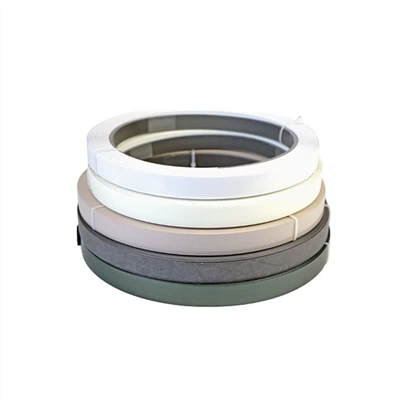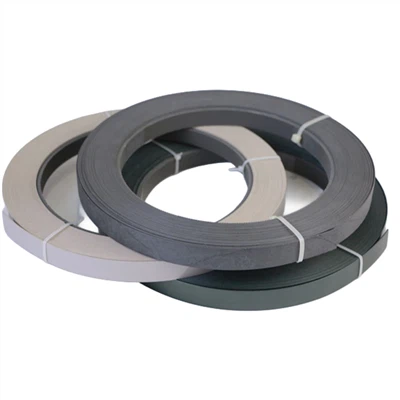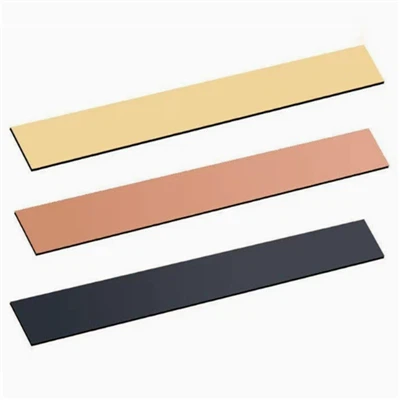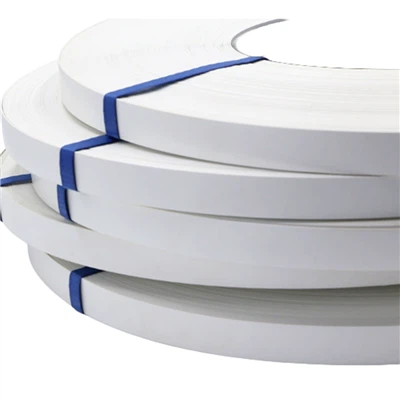
Bonding Strength: Once edge banding is complete, manually pull on the edge band to subjectively assess its tensile strength and observe the amount of wood chips or fibers adhering to the band; alternatively, conduct a formal tensile peel test. Under identical conditions-specifically, using the same edge banding machine, edge band material, operating method, and environmental setting-select the product that demonstrates superior tensile strength. Generally speaking, high-temperature adhesives exhibit greater bonding strength than medium- or low-temperature adhesives. Bonding strength is a critical factor that fundamentally determines the overall quality of the edge banding.
Bonding Strength and Affinity
Different brands of hot-melt adhesives vary in their initial tack strength and affinity. Adhesives with high initial tack strength help reinforce the overall bond and broaden the range of compatible edge band materials; however, they typically feature a shorter "open time" (the window during which bonding can occur). Conversely, adhesives with strong affinity are less prone to quality issues when used with materials that are inherently difficult to edge band. Given the varying quality of domestic edge banding materials-specifically factors such as the adhesive coating on PVC bands, the degree of adhesive bleed-through in melamine paper bands, the oil content of natural wood veneers, and the wettability of the paper or fabric backing on veneers-the affinity between the adhesive and the backing material is crucial for proper adhesion. If the affinity (wettability) of the edge band's backing surface is too low, it can result in reduced bonding strength or, ultimately, the detachment of the edge band. Therefore, when selecting a hot-melt adhesive, it is essential to choose one with an initial tack strength and viscosity value that are appropriately matched to the specific edge banding materials being used.
Viscosity
The viscosity value influences both the initial tack strength and the flow properties (fluidity) of the hot-melt adhesive, as well as the uniformity of its application. Typically, high-temperature adhesives (operating at 200°C) are formulated with a viscosity range of 45,000 to 120,000 mPa·s; for high-speed edge banding machines, it is advisable to select an adhesive with a viscosity value toward the higher end of this range. Medium-temperature adhesives (at 180°C) typically fall within a viscosity range of 20,000 to 40,000 mPa·s, while low-temperature adhesives (at 150°C) range from 15,000 to 25,000 mPa·s. It is important to note that a higher viscosity value does not necessarily equate to greater bonding strength.
Fluidity
The fluidity (flow properties) of the adhesive determines the uniformity of its application, as well as its ability to penetrate and effectively wet the surface of the substrate panel. Poor flow properties result in uneven and intermittent application during the bonding process. Furthermore, inadequate flow prevents the adhesive from penetrating the substrate, thereby hindering the formation of a "glue-nail" structure. Therefore, when selecting a hot-melt adhesive, priority should be given to products that exhibit superior flow characteristics at equivalent temperatures and viscosity levels.