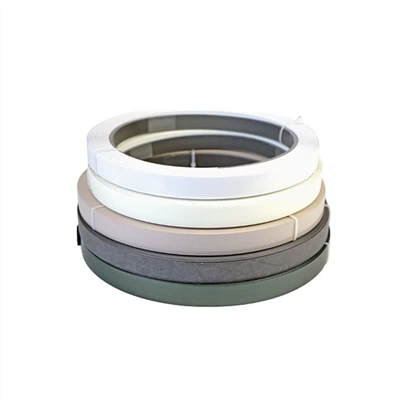

When it comes to cabinetry, the choice of edge banding is crucial not only for aesthetic purposes but also for its durability and resistance to various factors. As a supplier of Cabinet PVC Edge Banding, I often get asked about the resistance of our products to chemicals. In this blog post, I'll delve into this topic, exploring the chemical resistance of Cabinet PVC Edge Banding and why it matters in the context of cabinet manufacturing.
Understanding Cabinet PVC Edge Banding
Cabinet PVC Edge Banding is a popular choice for finishing the edges of cabinets and furniture. It offers a cost - effective and versatile solution that can mimic the look of more expensive materials such as White Laminate Edge Banding or Real Wood Edge Banding. PVC, or polyvinyl chloride, is a synthetic plastic polymer that has been used in a wide range of applications due to its flexibility, durability, and ease of processing.
The edge banding is typically applied to the exposed edges of cabinet panels to provide a smooth, finished appearance and to protect the edges from damage, moisture, and wear. It comes in various colors, thicknesses, and textures, allowing for customization to meet different design requirements.
Chemical Resistance: Why It's Important
In a kitchen or bathroom environment, cabinets are often exposed to a variety of chemicals. Cleaning agents, such as detergents, degreasers, and disinfectants, are commonly used to keep the cabinets clean and hygienic. In addition, spills of food, beverages, and other substances can also come into contact with the cabinet edges. If the edge banding is not resistant to these chemicals, it can suffer from discoloration, swelling, cracking, or delamination, which not only affects the appearance of the cabinets but also reduces their lifespan.
Factors Affecting Chemical Resistance
The chemical resistance of Cabinet PVC Edge Banding depends on several factors:
1. PVC Formulation
The composition of the PVC used in the edge banding plays a significant role in its chemical resistance. High - quality PVC formulations are designed to be more resistant to a wide range of chemicals. For example, some PVC compounds are formulated with additives that enhance their resistance to solvents, acids, and alkalis.
2. Thickness of the Edge Banding
Thicker edge banding generally offers better chemical resistance. A thicker layer of PVC provides a greater barrier against chemical penetration. However, it's important to balance the thickness with other factors such as cost and ease of installation.
3. Surface Treatment
The surface treatment of the edge banding can also affect its chemical resistance. Some edge bandings are treated with a protective coating that can enhance their resistance to chemicals. This coating can act as a barrier, preventing the chemicals from coming into direct contact with the PVC.
Testing the Chemical Resistance of Cabinet PVC Edge Banding
To ensure the quality and chemical resistance of our Cabinet PVC Edge Banding, we conduct a series of tests. These tests involve exposing the edge banding to various chemicals commonly found in household and commercial settings.
1. Immersion Tests
We immerse samples of the edge banding in different chemical solutions for a specified period. After the immersion, we evaluate the samples for any signs of damage, such as discoloration, swelling, or loss of adhesion.
2. Spot Tests
In spot tests, we apply a small amount of a chemical to the surface of the edge banding and let it sit for a certain time. Then we wipe off the chemical and examine the surface for any changes.
Common Chemicals and Their Effects on Cabinet PVC Edge Banding
1. Detergents and Cleaning Agents
Most common household detergents and cleaning agents have a relatively mild effect on Cabinet PVC Edge Banding. However, some strong - alkaline or acidic cleaners can cause damage over time. For example, bleach, which is a strong oxidizing agent, can cause discoloration and embrittlement of the PVC if left in contact for an extended period.
2. Solvents
Solvents such as acetone, alcohol, and toluene can have a more severe impact on Cabinet PVC Edge Banding. These solvents can dissolve or soften the PVC, leading to swelling, cracking, or delamination. It's important to avoid using these solvents on PVC edge banding unless specifically recommended by the manufacturer.
3. Food and Beverages
Spills of food and beverages are common in kitchen cabinets. While most food and beverages have a minimal effect on PVC edge banding, some acidic or sugary substances can cause staining or discoloration if not cleaned up promptly.
Comparing Cabinet PVC Edge Banding with Other Edge Banding Materials
When considering the chemical resistance of edge banding, it's useful to compare Cabinet PVC Edge Banding with other popular materials such as White ABS Edging.
1. ABS Edging
ABS (acrylonitrile - butadiene - styrene) is another commonly used material for edge banding. ABS generally has good chemical resistance, especially to some solvents and oils. However, it may not be as resistant to strong acids and alkalis as PVC.
2. Real Wood Edge Banding
Real wood edge banding has a natural and warm appearance. However, it is more susceptible to damage from chemicals, moisture, and wear compared to PVC. Wood can absorb liquids, leading to swelling, warping, and discoloration.
Tips for Maintaining the Chemical Resistance of Cabinet PVC Edge Banding
To ensure the long - term chemical resistance of Cabinet PVC Edge Banding, here are some tips:
1. Use Appropriate Cleaning Products
Choose mild, non - abrasive cleaning products that are specifically designed for PVC. Avoid using harsh chemicals or abrasive cleaners that can damage the edge banding.
2. Clean Spills Promptly
If a spill occurs, clean it up as soon as possible to prevent the chemical from penetrating the edge banding. Use a soft cloth and a mild cleaning solution to wipe the surface.
3. Avoid Prolonged Contact with Chemicals
Try to avoid leaving chemicals, such as cleaning agents or solvents, in contact with the edge banding for an extended period. Rinse the surface thoroughly after using any cleaning products.


Conclusion
The chemical resistance of Cabinet PVC Edge Banding is an important factor to consider when choosing edge banding for your cabinets. Our Cabinet PVC Edge Banding is designed to provide excellent resistance to a wide range of chemicals commonly found in household and commercial settings. By understanding the factors that affect chemical resistance and following the tips for maintenance, you can ensure that your cabinets look great and last for a long time.
If you are in the market for high - quality Cabinet PVC Edge Banding, we invite you to contact us for more information and to discuss your specific requirements. We are committed to providing the best products and services to meet your needs.
References
- ASTM International. (20XX). Standard test methods for evaluating the chemical resistance of plastics.
- Polymer Handbook. (20XX). Wiley - Interscience.
- Cabinet Manufacturers Association. (20XX). Best practices for cabinet edge banding.