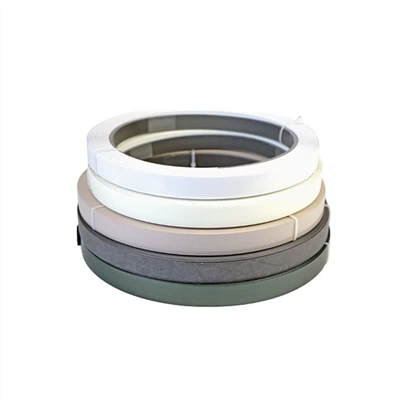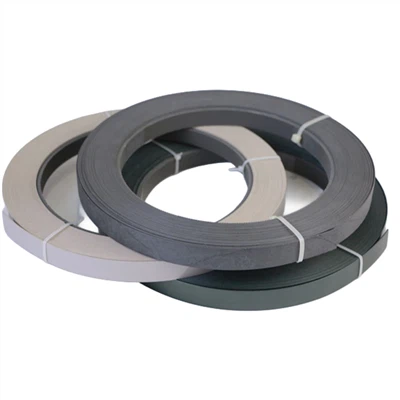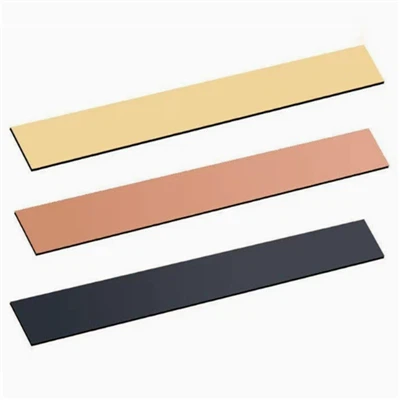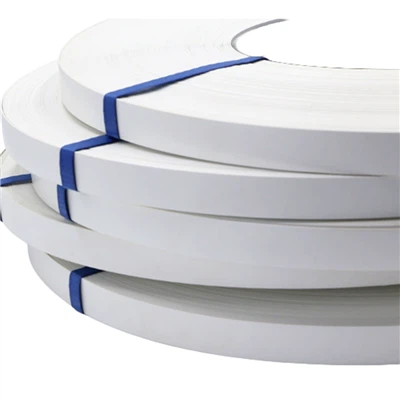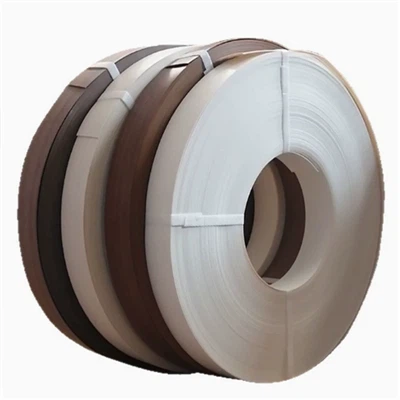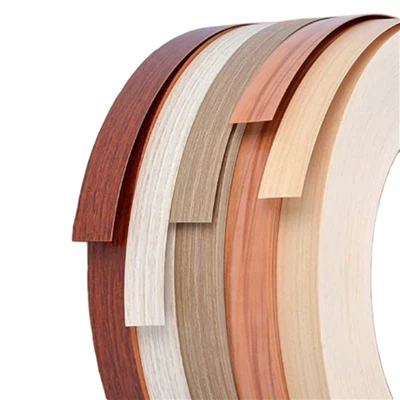
Examine the hue and surface roughness of the edge banding. The surface color of high-quality edge banding is crucial; it should closely match the customized product and appear vibrant. If the surface is excessively rough or exhibits drag marks, the overall quality is undoubtedly poor-this constitutes a defect in surface quality. This issue is largely unrelated to the quality of the edge banding's internal raw materials; rather, it primarily reflects the manufacturing plant's production processes and the technical proficiency of its workforce. High-quality edge banding is characterized by a smooth surface with few to no bubbles or drag marks, and a moderate level of gloss-neither excessively glossy nor overly matte (unless specific requirements dictate otherwise).
Inspect the flatness of both the top and bottom surfaces of the edge banding, ensuring uniform thickness. Any irregularities can result in a highly conspicuous glue line at the joint between the banding and the board, or create excessive gaps between the two components, thereby detracting from the overall aesthetic appeal. "Details determine success or failure"; often, a seemingly minor detail can lead to an awkward situation where the overall visual outcome is compromised.
Check for "whitening" during trimming or bending: does the edge banding turn significantly white when trimmed or flexed? Furthermore, does the underlying base color revealed during trimming closely match the surface color of the board? PVC edge banding is primarily manufactured from a blend of PVC resin, calcium carbonate, and various additives. If the calcium carbonate content is excessively high, phenomena such as whitening during trimming or bending will occur, indicating that the product is of inferior quality.
Assess the material's strength and elasticity. High strength implies superior abrasion resistance and, consequently, higher overall quality; however, excessive rigidity can increase the difficulty of processing. Conversely, low elasticity suggests poor abrasion resistance and diminished resistance to aging. Additionally, practical production requirements may dictate specific material properties: edge banding intended for manual trimming can be made slightly softer, while that intended for use with automatic edge banding machines can be made slightly harder.
Verify that the adhesive backing (if present) has been applied uniformly and that the banding does not peel off easily during application or subsequent use.
Finally, check the PVC edge banding for any discernible odor. Products manufactured using high-quality raw materials typically emit very little scent; if the odor is strong or pungent, it suggests that inferior raw materials were utilized during the manufacturing process.