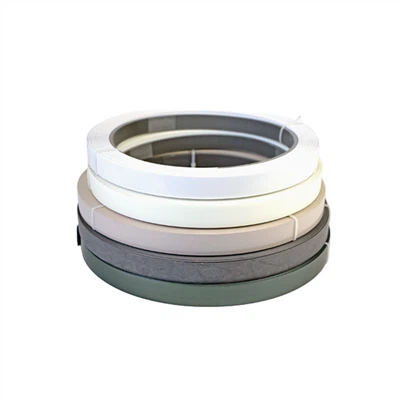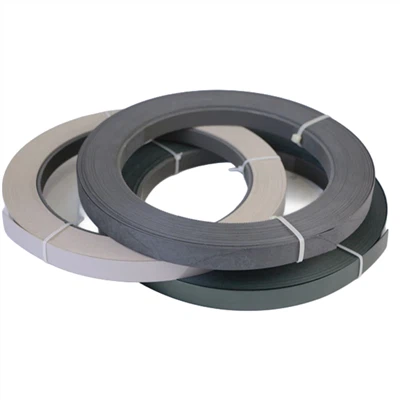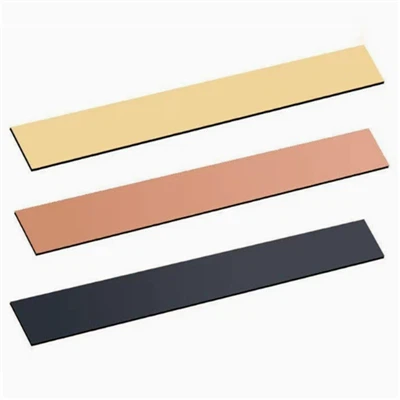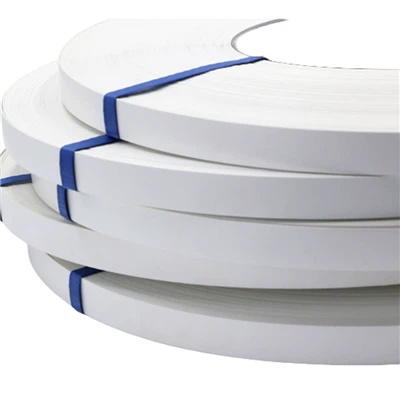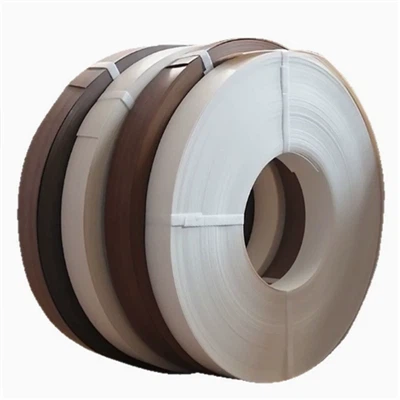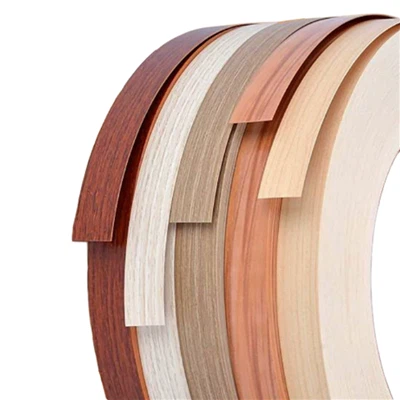
Visually inspect the edge banding to determine whether its color and texture match the board material being used, or if they align with the designer's specifications.
Check the surface of the edge banding to ensure it is smooth and flat, and free of impurities or speckles. If speckles or fine, pinhole-like textures are present, the banding may have been manufactured using recycled PVC scrap materials. Inspect the back of the edge banding to verify its flatness. You can use a flat blade held transversely against the banding to check if it forms a straight line; if it does not, thick glue lines will appear along the edges after the banding process. If the back of the edge banding is flat yet thick glue lines still appear after application, proceed with the following checks: Verify that the sawn surface of the board material is smooth. If the upper and lower saw blades used during cutting were of mismatched specifications, the sawn surface will feature small "steps" or ridges, which interferes with the edge banding process. Check whether the hot-melt adhesive has been applied too thickly. Verify that the thickness and pressure settings on the edge banding machine are properly calibrated and balanced. Apply a short section of edge banding to a test piece, then forcefully tear it off to assess whether the adhesion strength between the banding and the hot-melt adhesive is adequate and uniform. If the adhesion strength is insufficient, check whether the hot-melt adhesive temperature on the machine meets operational standards; refer to Item 3 regarding "Backing Adhesive" under the "PVC Wood-Grain Edge Banding" section (as mentioned in the first point) for reference.
After trimming, check whether the side profile of the board material is uniform; if a jagged or saw-toothed pattern is visible, it may be due to one of the following reasons: the trimming cutter is too dull; the edge banding material is too rigid; or the edge banding contains an excessive amount of calcium carbonate filler. Scratch the surface of the edge banding with a fingernail or a tool; if the surface becomes damaged, it indicates that the banding's surface abrasion resistance and hardness do not meet standard requirements, thereby proving that the edge banding is of substandard quality.