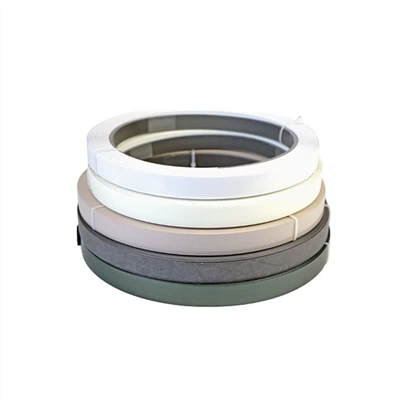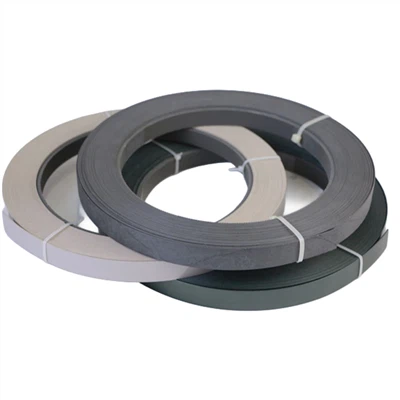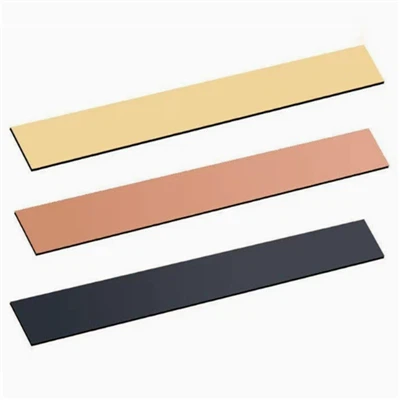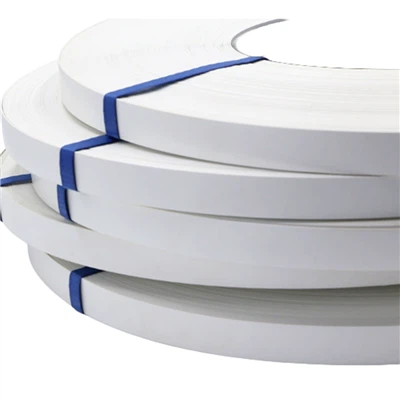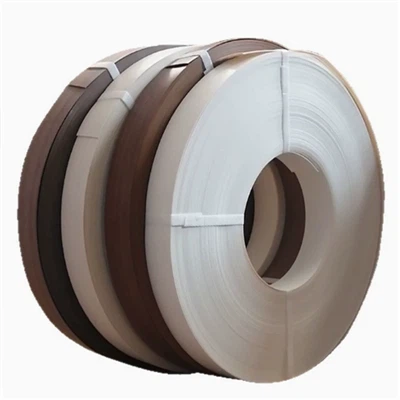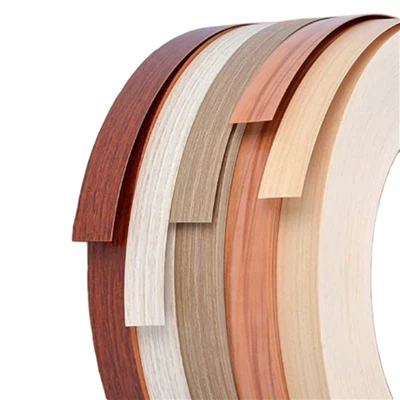
PVC furniture edge banding is relatively lightweight-particularly when compared to materials such as metal or acrylic. This lightness is not simply a consequence of its status as a polymer compound; rather, it stems from its nature as an organic compound-specifically, one composed of lighter elements such as carbon, hydrogen, oxygen, and chlorine.
The material of PVC furniture edge banding is plastic, a substance known for its ease of processing. Plastics possess inherent plasticity-meaning they can be deformed when subjected to heat or pressure, yet retain their new shape once cooled or when the pressure is released. Through processes such as extrusion, these materials can be fabricated into edge banding strips of various distinct profiles-including T-shaped, H-shaped, D-shaped, V-shaped, I-shaped, and many others.
PVC furniture edge banding offers a combination of high quality and affordability; furthermore, the price fluctuations associated with plastics are significantly less volatile than those of metals.