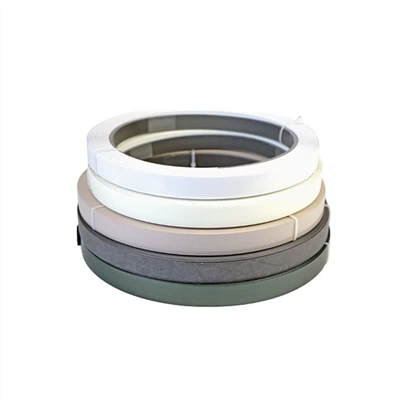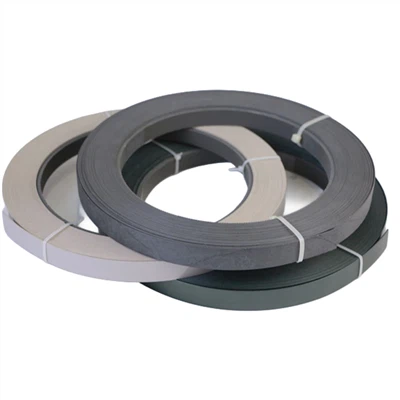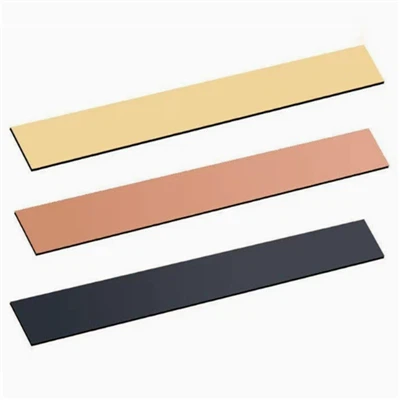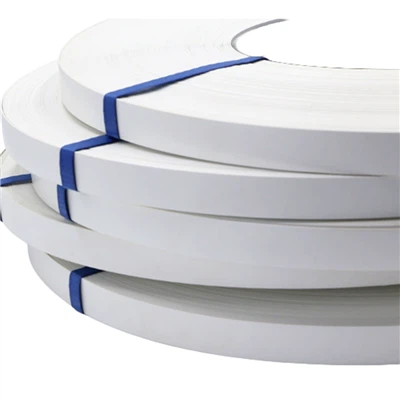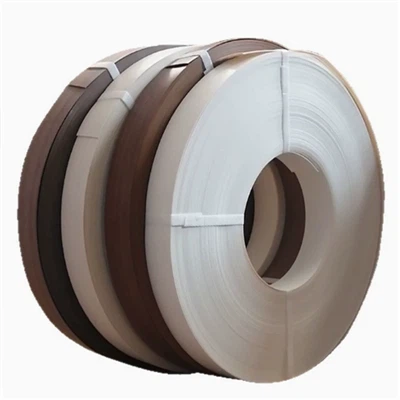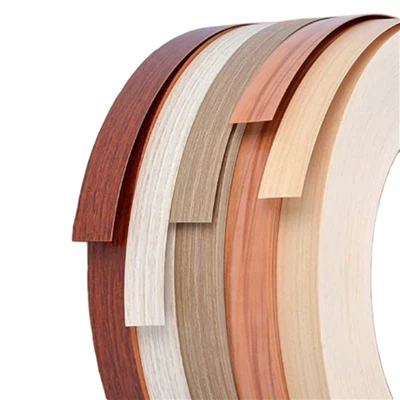
The substrate for PVC edge banding consists of PVC resin, calcium carbonate powder, and various auxiliary additives (such as stabilizers, DOP oil, ACR, stearic acid, carbon black, color pigments, anti-aging agents, etc.). The quality of the edge banding's trimming finish is directly related to the specific ratio of ingredients used in its substrate formulation.
PVC Wood-Grain Edge Banding: This type is produced by printing an ink pattern onto a PVC substrate, followed by roller-coating with UV varnish and subsequent curing.
ABS Edge Banding: ABS resin is currently recognized as one of the most advanced materials available internationally. Edge banding manufactured from ABS resin contains no added calcium carbonate; consequently, it exhibits a translucent, smooth finish after trimming and is completely free from the "whitening" phenomenon often seen in other materials. However, with a market price of approximately 12,800 RMB per ton for ABS resin, production costs are relatively high. As a result, in the commercial market, ABS edge banding typically sells for about twice the price of PVC edge banding of equivalent specifications. Solid Wood Veneer Finger-Jointed Edge Banding is primarily utilized for furniture finished with wood veneers.
Melamine Edge Banding: Commonly referred to as "paper edge banding," this material offers several advantages: it adheres easily and exhibits excellent dimensional stability-resisting expansion, contraction, and deformation when exposed to temperature fluctuations. However, due to its inherently brittle nature, it is prone to breakage and can be easily damaged by impacts during the furniture manufacturing and handling processes.