
Can edge banding be used on stainless - steel surfaces?
Hey there! I'm an edge banding supplier, and I often get asked this question: Can edge banding be used on stainless - steel surfaces? Well, let's dig into it.
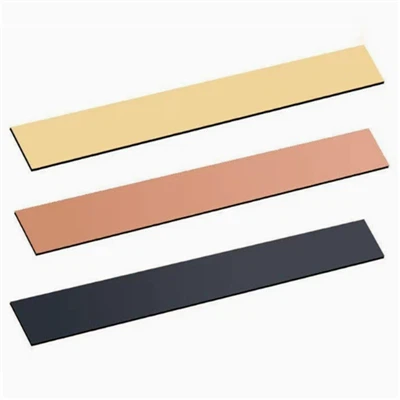
First off, what is edge banding? Edge banding is a thin strip of material that's used to cover the exposed edges of furniture, cabinets, and other wood - based products. It gives a finished look, protects the edges from damage, and can enhance the overall aesthetic. We offer a variety of edge banding options, like Plywood ABS Edging, Melamine Board Edge Banding, and Birch Plywood Edge Banding.
Now, back to the main question. Using edge banding on stainless - steel surfaces isn't a common practice, but it's not impossible. Stainless steel is a smooth, hard, and non - porous material. Edge banding is typically designed for wood or wood - like surfaces, which are more porous and can better hold the adhesive used for attaching the edge banding.


One of the biggest challenges is adhesion. The adhesives used for traditional edge banding are formulated to bond well with wood. Stainless steel has a very different surface chemistry. The smoothness and non - porosity of stainless steel make it difficult for the adhesive to stick. If the edge banding doesn't adhere properly, it can peel off easily, which defeats the purpose of using it in the first place.
However, if you're really set on using edge banding on a stainless - steel surface, there are a few things you can try. First, you need to prepare the stainless - steel surface. Cleaning it thoroughly with a degreaser is a must. Any dirt, oil, or grease on the surface can prevent the adhesive from bonding. After cleaning, you can use a primer specifically designed for metal surfaces. This primer can help the adhesive stick better to the stainless steel.
Another option is to use a different type of adhesive that's designed for metal - to - plastic or metal - to - wood bonding. These adhesives are formulated to work with non - porous surfaces like stainless steel. You can find them at hardware stores or online.
There are also some special types of edge banding that might work better on stainless - steel surfaces. For example, some edge banding materials come with a self - adhesive backing that's more suitable for smooth surfaces. These self - adhesive edge bandings can sometimes provide a better bond on stainless steel compared to traditional adhesive - applied edge banding.
But even with all these measures, there are still some limitations. The edge banding might not look as seamless on a stainless - steel surface as it does on wood. Stainless steel has a unique sheen and texture, and the edge banding might stand out a bit. Also, the durability of the edge banding on stainless steel might be different. It could be more prone to wear and tear, especially in high - traffic areas.
In some cases, using edge banding on stainless - steel surfaces might be more of a decorative touch rather than a functional one. For example, if you want to add a pop of color or a different texture to a stainless - steel countertop or a cabinet front, edge banding could be a creative option.
So, in conclusion, while it's possible to use edge banding on stainless - steel surfaces, it comes with its challenges. You need to be prepared to do some extra work in terms of surface preparation and choosing the right adhesive. If you're considering this, it's a good idea to do a small test first to see how well the edge banding adheres and how it looks on the stainless - steel surface.
If you're interested in exploring edge banding options for your projects, whether it's for stainless - steel surfaces or traditional wood - based products, feel free to reach out. We're here to help you find the best solution for your needs. Whether you need advice on the right type of edge banding or want to discuss a large - scale order, we're just a message away. Let's start a conversation and see how we can make your project look its best!
References:
- General knowledge of edge banding materials and their applications.
- Experience in the edge banding supply industry.