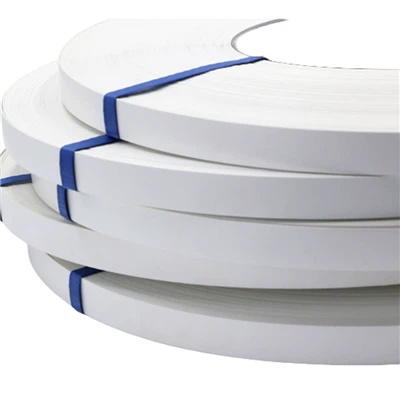

Hey there! I'm a supplier of PET edge banding, and I often get asked about how to choose the right thickness of PET edge banding for different applications. It's a crucial question because the thickness can significantly impact the performance, appearance, and durability of the final product. So, let's dive into it!
Understanding PET Edge Banding
First off, let's quickly go over what PET edge banding is. PET, or polyethylene terephthalate, is a type of thermoplastic polymer that's widely used in various industries. In the world of edge banding, it offers a great combination of strength, flexibility, and aesthetic appeal. It's resistant to scratches, chemicals, and moisture, making it a popular choice for a range of applications.
Factors to Consider When Choosing Thickness
Application Type
The type of application is one of the most important factors in determining the right thickness of PET edge banding. For example, if you're working on a high - traffic area like a commercial kitchen cabinet, you'll need a thicker edge banding to withstand the daily wear and tear. On the other hand, for a residential bookshelf or a decorative piece, a thinner edge banding might be sufficient.
- Thin Edge Banding (0.3 - 0.6mm): This is ideal for applications where you want a more delicate and subtle look. It's commonly used in furniture that doesn't experience a lot of physical stress, such as decorative shelves, small cabinets, or display cases. The thin edge banding is easy to apply and gives a clean, minimalist appearance. For instance, if you're creating a modern - style bookshelf with a sleek design, a 0.3mm PET edge banding can enhance the overall aesthetic without adding too much bulk.
- Medium Edge Banding (0.8 - 1.2mm): This thickness strikes a good balance between durability and appearance. It's suitable for most residential furniture, including kitchen cabinets, wardrobes, and desks. The medium - thickness edge banding provides enough protection against minor impacts and scratches while still maintaining a relatively smooth and refined look. For example, in a typical kitchen cabinet, a 1mm PET edge banding can protect the edges from water splashes, food stains, and normal use.
- Thick Edge Banding (1.5 - 3mm): Thick edge banding is designed for heavy - duty applications. It's commonly used in commercial furniture, such as office desks, restaurant booths, and industrial cabinets. The thicker material can withstand significant abuse, including rough handling, impacts, and high - traffic areas. For example, in a busy office environment, a 2mm PET edge banding on desks can prevent damage from daily use, like moving chairs and placing heavy objects.
Substrate Material
The material of the substrate to which the edge banding will be applied also plays a role in thickness selection. Different substrates have different levels of hardness and stability, which can affect how well the edge banding adheres and performs.
- Plywood: Plywood is a common substrate for furniture. It has a relatively smooth surface and good structural integrity. For plywood, a medium - thickness edge banding (0.8 - 1.2mm) is usually a good choice. It can conform well to the edges of the plywood and provide adequate protection. However, if the plywood is going to be used in a high - stress environment, a thicker edge banding might be necessary. Check out Metal Edge Banding for Plywood for more options on edge banding for plywood.
- Particleboard: Particleboard is a more porous and less dense material compared to plywood. It requires a thicker edge banding to ensure proper adhesion and protection. A 1.2 - 1.5mm edge banding is often recommended for particleboard. This thickness can better cover the rough edges of the particleboard and prevent the material from chipping or splitting.
- MDF (Medium - Density Fiberboard): MDF has a smooth and uniform surface, making it easy to apply edge banding. Depending on the application, a thin to medium - thickness edge banding can be used. For decorative MDF pieces, a 0.6 - 0.8mm edge banding might be sufficient, while for more functional MDF furniture, a 1 - 1.2mm edge banding is a better option.
Aesthetic Requirements
The look you're trying to achieve also influences the thickness of the edge banding. Some applications call for a more prominent edge, while others require a more seamless appearance.
- Visible Edges: If the edges of the furniture are going to be highly visible, such as in a modern - style piece with exposed edges, you might want to choose a thicker edge banding to make a statement. A 1.5 - 3mm edge banding can add a bold and substantial look to the furniture. For example, in a contemporary dining table with a thick edge, a 2mm PET edge banding can enhance the overall design.
- Seamless Look: For a more seamless and integrated look, a thinner edge banding is the way to go. A 0.3 - 0.6mm edge banding can blend in with the substrate and give the impression of a continuous surface. This is often desired in high - end furniture or in applications where a minimalist aesthetic is preferred.
Special Applications
Weather - Resistant Applications
In outdoor or high - humidity environments, you need to consider the weather - resistance of the edge banding. For these applications, a thicker edge banding with good moisture - resistance properties is recommended. A 1.5 - 3mm PET edge banding can provide better protection against water, UV rays, and temperature changes. You might also be interested in L Shape Weatherstrip, which can offer additional protection in weather - exposed areas.
Cabinet Interiors
When it comes to cabinet interiors, the thickness of the edge banding can affect the functionality and appearance. For the inside edges of cabinets, a thinner edge banding (0.3 - 0.6mm) is often used to avoid taking up too much space. It can also give a clean and uncluttered look. However, if the cabinet is going to be used for storing heavy or sharp objects, a slightly thicker edge banding (0.8 - 1.2mm) might be more appropriate to prevent damage.
PVC Cabinet Edge Trim Compatibility
If you're using PVC cabinet edge trim in combination with PET edge banding, you need to ensure that the thicknesses are compatible. The thickness of the PET edge banding should be similar to that of the PVC trim to create a cohesive look. Check out PVC Cabinet Edge Trim for more information on choosing the right trim for your cabinets.


Conclusion
Choosing the right thickness of PET edge banding for different applications is all about balancing the needs of the application, the substrate material, and the aesthetic requirements. By considering these factors, you can select the edge banding that will provide the best performance and appearance for your project.
If you're in the market for high - quality PET edge banding, don't hesitate to reach out. We're here to help you make the right choice for your specific needs. Whether you're a furniture manufacturer, a DIY enthusiast, or a contractor, we have the expertise and products to meet your requirements. Let's start a conversation and find the perfect PET edge banding for your next project!
References
- "Plastics in Furniture Manufacturing" - Industry Handbook
- "Edge Banding: A Comprehensive Guide" - Woodworking Magazine
- Manufacturer's Technical Specifications for PET Edge Banding