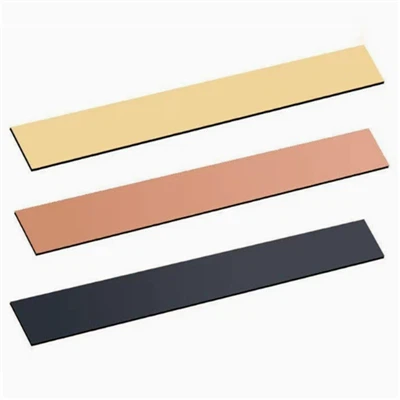

Hey there! As a supplier of White PVC Edge Banding, I often get asked if our product is suitable for marine environments. It's a great question, and one that I'm more than happy to dive into.
First off, let's talk about what White PVC Edge Banding is. PVC, or polyvinyl chloride, is a type of plastic that's known for its durability, flexibility, and resistance to moisture. White PVC Edge Banding is a strip of this material that's used to cover the edges of furniture, cabinets, and other wooden products. It gives a clean, finished look and helps protect the edges from damage.
Now, when it comes to marine environments, there are a few factors we need to consider. The first is moisture. The ocean is full of water, and that means a high level of humidity. PVC is generally resistant to moisture, which is a big plus. It won't absorb water like wood can, so it won't warp, rot, or swell. This makes it a good candidate for use in boats, yachts, and other marine applications.
Another factor is salt. The salt in seawater can be corrosive to many materials. However, PVC is resistant to salt and other chemicals. It won't rust or corrode like metal, which is a huge advantage in a marine setting. This means that our White PVC Edge Banding can withstand the harsh conditions of the ocean without deteriorating.
UV rays are also a concern in marine environments. The sun's rays can be intense, especially on the water. PVC is somewhat resistant to UV rays, but over time, prolonged exposure can cause it to fade or become brittle. To combat this, some manufacturers add UV stabilizers to their PVC products. At our company, we make sure our White PVC Edge Banding has these stabilizers to help it last longer in the sun.
But it's not just about the material itself. The installation of the edge banding also plays a role in its suitability for marine environments. Proper installation is crucial to ensure a tight seal and prevent water from seeping behind the banding. If the edge banding isn't installed correctly, it can lead to problems like peeling or water damage.
So, is White PVC Edge Banding suitable for marine environments? In most cases, the answer is yes. It has many of the qualities needed to withstand the challenges of the ocean, such as moisture resistance, salt resistance, and some level of UV protection. However, it's important to keep in mind that no material is perfect, and there are some limitations.
If you're looking for alternatives to White PVC Edge Banding for marine applications, there are a few options. One is Metal Edge Banding for Plywood. Metal edge banding can be very durable and give a sleek, modern look. However, as I mentioned earlier, metal can corrode in saltwater, so it may require more maintenance.
Another option is L Shape Weatherstrip. This type of weatherstrip can help seal the edges and prevent water from getting in. It's often used in combination with edge banding to provide extra protection.
And if you're looking for a more high - end option, Brushed Aluminum Edge Banding can give a luxurious look. But again, like other metal products, it needs to be protected from corrosion.
In conclusion, White PVC Edge Banding can be a great choice for marine environments. It offers a good balance of durability, affordability, and ease of installation. But it's important to assess your specific needs and the conditions your project will be exposed to.


If you're interested in using our White PVC Edge Banding for your marine project, or if you have any questions about it, don't hesitate to reach out. We're here to help you make the best decision for your needs. Whether you're building a small boat or a large yacht, we can provide you with the high - quality edge banding you need.
References
- Various industry reports on PVC materials and their properties in different environments.
- Studies on the effects of saltwater and UV rays on plastic materials.