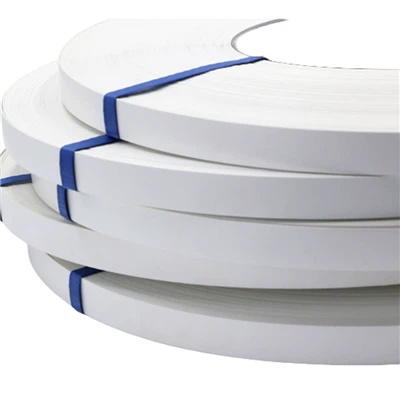

When it comes to the world of furniture and interior design, white PVC edge banding is a staple. As a supplier deeply entrenched in this industry, I've witnessed firsthand the versatility and importance of this product. One of the most frequently asked questions I encounter is, "How thick is the common white PVC edge banding?" In this blog post, I'll delve into this topic, exploring the standard thicknesses, factors influencing them, and how they impact the overall quality and functionality of the edge banding.
Standard Thicknesses of White PVC Edge Banding
White PVC edge banding is available in a range of thicknesses, with the most common ones being 0.3mm, 0.4mm, 0.5mm, 0.6mm, 0.8mm, 1.0mm, 1.2mm, and 1.5mm. Each thickness has its own unique applications and advantages.


- 0.3mm - 0.6mm: These thinner edge bandings are often used for lightweight furniture, such as cabinets, drawers, and shelves. They are flexible and easy to apply, making them ideal for curved or irregular surfaces. However, they may not be as durable as thicker options and are more prone to damage.
- 0.8mm - 1.2mm: This range is the most commonly used for general furniture applications. It offers a good balance between flexibility and durability, making it suitable for a wide variety of furniture pieces. The 1.0mm thickness is particularly popular as it provides a smooth and seamless finish.
- 1.5mm: Thicker edge banding is typically used for high - end furniture or applications where extra durability is required. It can withstand more wear and tear, making it suitable for furniture that will be subject to heavy use, such as commercial furniture or furniture in high - traffic areas.
Factors Influencing the Thickness Selection
Several factors come into play when choosing the appropriate thickness of white PVC edge banding.
- Furniture Type: Different types of furniture require different thicknesses. For example, a delicate bedside table may only need a thin edge banding, while a sturdy dining table may benefit from a thicker one.
- Usage and Wear: If the furniture will be used frequently or in a harsh environment, a thicker edge banding is recommended. It will be more resistant to scratches, chips, and other forms of damage.
- Aesthetic Preferences: Thicker edge banding can create a more substantial and luxurious look, while thinner edge banding can give a more delicate and refined appearance. The choice often depends on the overall design aesthetic of the furniture.
- Cost: Thicker edge banding generally costs more than thinner ones. Therefore, cost can be a significant factor, especially for large - scale furniture production.
Impact of Thickness on Quality and Functionality
The thickness of white PVC edge banding has a direct impact on its quality and functionality.
- Durability: Thicker edge banding is more durable and can withstand more wear and tear. It is less likely to peel, chip, or crack, ensuring a longer lifespan for the furniture.
- Adhesion: A thicker edge banding may provide better adhesion to the substrate, especially when using high - quality adhesives. This helps to prevent the edge banding from coming loose over time.
- Appearance: Thicker edge banding can create a more pronounced and professional look. It can also cover up any imperfections on the edge of the furniture, giving it a clean and finished appearance.
- Flexibility: Thinner edge banding is more flexible, which makes it easier to apply to curved or irregular surfaces. However, this flexibility can also make it more prone to damage.
Comparing White PVC Edge Banding with Other Types
In addition to white PVC edge banding, there are other types of edge banding available in the market, such as White ABS Edging, Walnut Veneer Edging, and White Laminate Edge Banding.
- White ABS Edging: ABS edge banding is known for its high impact resistance and durability. It is often used in applications where the furniture will be subject to heavy use. However, it may be more expensive than white PVC edge banding.
- Walnut Veneer Edging: Walnut veneer edge banding offers a natural and luxurious look. It is made from real walnut veneer, which gives it a unique grain pattern. However, it requires more care and maintenance compared to PVC edge banding.
- White Laminate Edge Banding: Laminate edge banding is a cost - effective option that offers a variety of colors and patterns. It is easy to clean and maintain, but it may not be as durable as PVC or ABS edge banding.
Conclusion
In conclusion, the thickness of common white PVC edge banding varies depending on the application and requirements. Whether you're looking for a thin and flexible option for a delicate piece of furniture or a thick and durable one for a high - end piece, there is a suitable thickness available. As a supplier, I understand the importance of choosing the right edge banding for your project. If you have any questions or need further assistance in selecting the appropriate thickness of white PVC edge banding, I encourage you to reach out. We can discuss your specific needs and provide you with the best solutions for your furniture projects. Contact us today to start a procurement discussion and find the perfect edge banding for your needs.
References
- Furniture Industry Handbook: A comprehensive guide to furniture materials and manufacturing processes.
- PVC Edge Banding Technical Manual: Provides detailed information on the properties and applications of PVC edge banding.