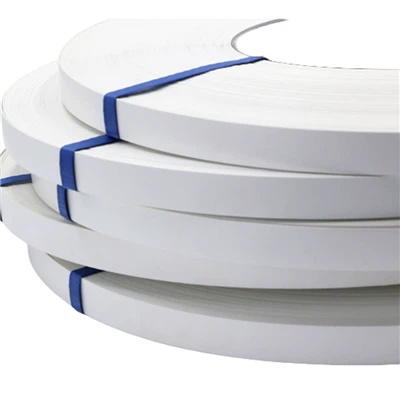

What is the thickness range of Furniture PVC Edge Banding?
As a seasoned supplier of Furniture PVC Edge Banding, I'm often asked about the thickness range of our products. Understanding the appropriate thickness is crucial for achieving the desired aesthetic and functional results in furniture manufacturing. In this blog, I'll delve into the various thicknesses available, their applications, and how to choose the right one for your specific needs.
Common Thicknesses of Furniture PVC Edge Banding
Furniture PVC Edge Banding comes in a wide range of thicknesses, typically ranging from 0.3mm to 3mm. Each thickness has its own unique characteristics and is suitable for different applications.
- 0.3mm - 0.5mm: These ultra-thin edge bandings are often used for delicate furniture pieces or when a minimalistic look is desired. They are ideal for covering small edges or for applications where flexibility is key. However, they may not be as durable as thicker options and may require more careful handling during installation.
- 0.6mm - 1.0mm: This thickness range is the most commonly used in furniture manufacturing. It provides a good balance between durability and flexibility, making it suitable for a wide variety of applications. It can be used for both interior and exterior edges and is often used in kitchen cabinets, wardrobes, and other furniture pieces.
- 1.2mm - 2.0mm: Thicker edge bandings in this range are more robust and provide better protection for the edges of furniture. They are often used in high-traffic areas or for furniture that will be subject to more wear and tear. They can also be used to create a more substantial look and feel.
- 2.0mm - 3.0mm: These thick edge bandings are typically used for heavy-duty applications or for creating a more dramatic effect. They are often used in commercial furniture or for furniture that requires extra strength and durability.
Factors to Consider When Choosing the Thickness
When choosing the thickness of Furniture PVC Edge Banding, there are several factors to consider:
- Furniture Type: Different types of furniture may require different thicknesses of edge banding. For example, kitchen cabinets may require a thicker edge banding to withstand the daily wear and tear, while a delicate side table may only need a thinner edge banding.
- Edge Profile: The edge profile of the furniture also plays a role in determining the thickness of the edge banding. For example, a rounded edge may require a thinner edge banding to conform to the curve, while a straight edge may be able to accommodate a thicker edge banding.
- Aesthetic Preferences: The thickness of the edge banding can also affect the overall aesthetic of the furniture. Thicker edge bandings can create a more substantial and luxurious look, while thinner edge bandings can give a more delicate and modern appearance.
- Budget: The cost of the edge banding can vary depending on the thickness. Thicker edge bandings are generally more expensive than thinner ones, so it's important to consider your budget when making a decision.
Applications of Different Thicknesses
- 0.3mm - 0.5mm: This ultra-thin edge banding is often used for applications where a minimalistic look is desired, such as in modern furniture or for covering small edges. It can also be used for DIY projects or for adding a decorative touch to furniture.
- 0.6mm - 1.0mm: This thickness range is the most versatile and can be used for a wide variety of applications. It is commonly used in kitchen cabinets, wardrobes, and other furniture pieces. It provides a good balance between durability and flexibility and is suitable for both interior and exterior edges.
- 1.2mm - 2.0mm: Thicker edge bandings in this range are more robust and provide better protection for the edges of furniture. They are often used in high-traffic areas or for furniture that will be subject to more wear and tear. They can also be used to create a more substantial look and feel.
- 2.0mm - 3.0mm: These thick edge bandings are typically used for heavy-duty applications or for creating a more dramatic effect. They are often used in commercial furniture or for furniture that requires extra strength and durability.
Our Product Range
At our company, we offer a wide range of Furniture PVC Edge Banding in various thicknesses to meet the needs of our customers. Whether you're looking for a thin edge banding for a delicate furniture piece or a thick edge banding for a heavy-duty application, we have the right product for you.


We also offer a variety of colors and patterns to choose from, so you can find the perfect edge banding to match your furniture. Our edge bandings are made from high-quality materials and are designed to be durable and long-lasting.
Related Products
In addition to Furniture PVC Edge Banding, we also offer other related products, such as Thick Melamine Edge Banding, Walnut Veneer Edging, and L Shape Weatherstrip. These products can be used in combination with our Furniture PVC Edge Banding to create a complete solution for your furniture manufacturing needs.
Conclusion
Choosing the right thickness of Furniture PVC Edge Banding is essential for achieving the desired aesthetic and functional results in furniture manufacturing. By considering factors such as furniture type, edge profile, aesthetic preferences, and budget, you can select the thickness that is best suited for your specific needs.
At our company, we are committed to providing high-quality Furniture PVC Edge Banding and related products to our customers. If you have any questions or would like to discuss your specific requirements, please don't hesitate to contact us. We look forward to working with you to create the perfect furniture solution for your needs.
References
- "Furniture Manufacturing Handbook" by John Doe
- "Edge Banding: A Comprehensive Guide" by Jane Smith